


Where is the French Riviera? It is a question that appears frequently in travel searches, often from people who recognize the name but want geographic clarity before committing to flights or accommodation. The French Riviera, also known as the Côte d’Azur, sits along the southeastern edge of France, where the land slopes down toward the Mediterranean Sea and the Alps begin to assert their presence inland.
Understanding where the French Riviera is located matters because this is not a single destination. It is a defined stretch of coastline made up of distinct towns, elevated settlements, and residential areas that operate at different speeds.
Where the French Riviera Sits on a Map and How Its Main Towns Align
When people search “where is the French Riviera on a map?”, they are usually looking for orientation rather than strict borders. On a map of southern France, the Riviera appears along the eastern Mediterranean coastline, directly north of Italy.
Some of the best-known locations help anchor that map. Cap d’Antibes occupies a narrow peninsula between Cannes and Nice, known for its residential character and limited public access to parts of the coast. Cannes sits slightly west, functioning both as a working city and a seasonal focal point.
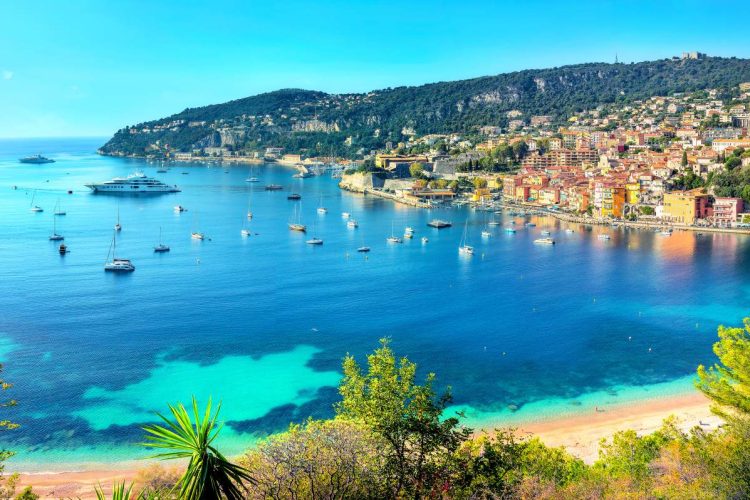
Saint-Jean-Cap-Ferrat, located on the French Riviera between Nice and Monaco, forms a narrow peninsula with elegant walking paths that follow the waterline rather than the roads, creating a seamless connection with the Mediterranean landscape. Just beside it, Villefranche-sur-Mer wraps around one of the deepest natural bays in the Mediterranean, where calm waters and a naturally sheltered harbor enhance the area’s maritime character. Rising dramatically above the coastline, Èze stands perched on the hills, its position chosen long before sweeping views became a defining measure of prestige and enduring appeal.
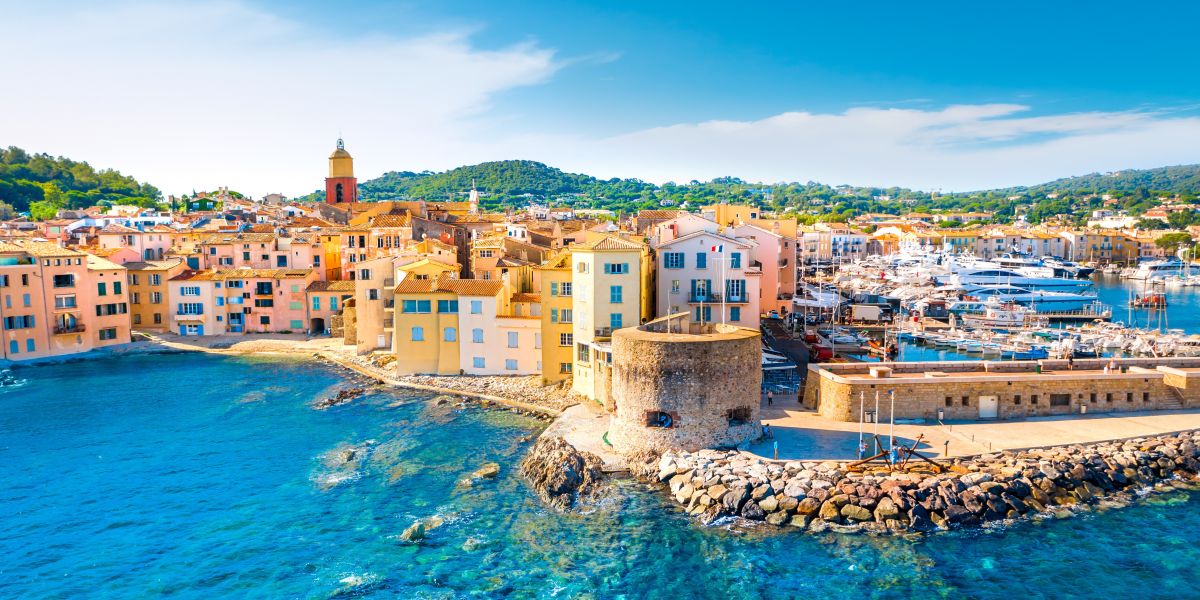
Further along the coast, about a hundred kilometers west of Nice, Saint-Tropez stands apart geographically and culturally. Its harbor defines the town, while the surrounding area spreads out into quieter residential zones.
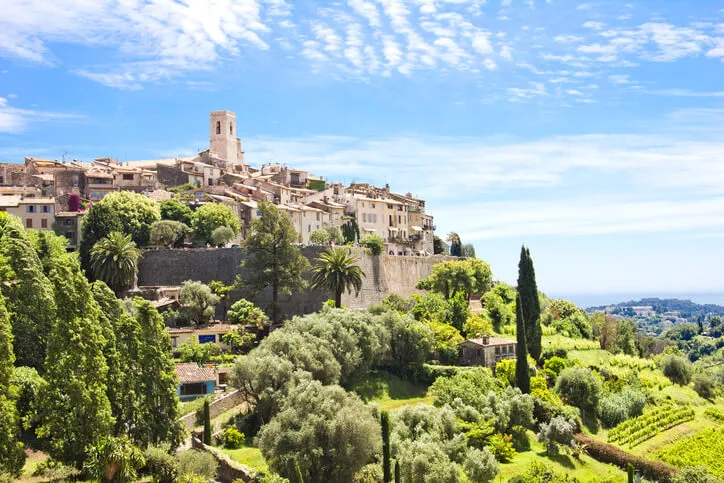
Perched in the hills above the Riviera, Saint-Paul-de-Vence is widely regarded as a true artists’ village, home to renowned museums, inspiring art galleries, and iconic gastronomic addresses such as La Colombe d’Or, a legendary establishment that has welcomed generations of celebrated artists and creatives.
Located in the hills above Cannes, just a short drive inland from the coastline, the historic village of Mougins captivates visitors with its famous Rue des Orfèvres, lined with numerous art galleries, ateliers, and elegant boutiques, creating a refined atmosphere that seamlessly complements the coastal elegance of the Côte d’Azur.
How to Reach the French Riviera by Air, Rail, or Road
Once you know where the French Riviera is located, getting there is relatively straightforward. Nice Côte d’Azur Airport serves as the primary international gateway, offering direct connections from major European cities as well as selected long-haul routes from North America. From the airport, most Riviera towns are within easy driving distance.
Train travel is another practical option. The SNCF inOui high-speed service links Paris to Nice in roughly five and a half hours, moving from inland landscapes to open coastline as the journey progresses. Travelers arriving from Italy often continue west by rail or car, making the Riviera a natural extension of a broader European itinerary.
Driving appeals to visitors who value flexibility, particularly those staying above the coast or planning regular inland excursions.
The area and the surroundings
So, where is the French Riviera located exactly? The region runs along France’s Mediterranean coast, starting near the Italian border and extending west toward Provence. When travelers ask, “where is the French Riviera located in France?”, the most accurate answer places it mainly within the Alpes-Maritimes department, with part of the coastline continuing into the Var.
This position shapes daily life. The sea defines movement along the coast. Inland, the terrain rises quickly, bringing cooler air and sharper views. A short drive can feel like a change of country, which is one reason the region never feels monotonous.
A quick clarification: if you are searching “where is the French Broad River?”, that river is located in the United States, flowing through North Carolina and Tennessee. Despite the shared word “French,” it has no connection to France or the French Riviera.
Climate and Landscape Characteristics of the French Riviera
The French Riviera benefits from a Mediterranean climate that supports travel throughout the year.
Summer temperatures along the coast usually range from 75°F to 85°F (24°C to 29°C), with sea breezes helping to moderate the heat. Inland areas and elevated villages tend to be cooler, particularly after sunset.
Spring and fall offer comfortable conditions, with daytime temperatures typically between 60°F and 72°F (16°C to 22°C). These seasons suit walking and sightseeing without the intensity of midsummer.
Winter remains mild by European standards. Coastal temperatures average 45°F to 60°F (7°C to 16°C), with clear days common and snow largely confined to the nearby Alps.
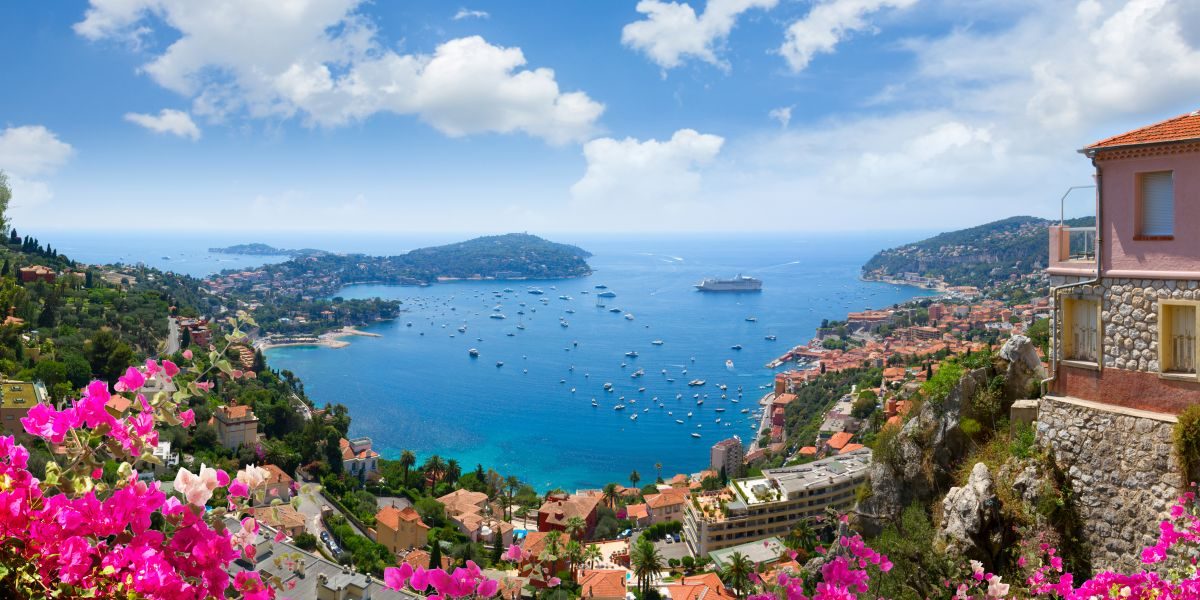
The landscape shifts quickly across short distances. Beaches meet the water directly. Roads begin climbing almost immediately inland. Higher ground becomes wooded within minutes. This compressed variety is one of the defining characteristics of the French Riviera and a major reason it appeals to travelers who want change without constant relocation.
What to Visit Once You Arrive on the French Riviera
Knowing where the French Riviera is located helps with planning, especially since distances are shorter than many expect. Coastal walking paths around Cap Ferrat offer access to viewpoints that feel removed from urban life. Old towns in places like Antibes or Èze encourage slower exploration, with streets that narrow as they rise and public spaces that remain shaded for much of the day.
Cannes reveals different sides depending on where you spend time, from the seafront to residential neighborhoods further inland. Saint-Tropez still shows traces of its fishing past once you move away from the marina. Inland routes lead to vineyards and hill towns that feel separate from the coast without being far away.
Why the French Riviera Continues to Attract Travelers
The appeal of the French Riviera begins with its location. It offers easy access without feeling transitional. Visitors arrive quickly, yet daily life slows once they settle in.
There is also continuity here. Local markets operate year-round. Residential areas remain active outside peak season. The region does not switch itself off when summer ends, which is part of its long-term draw.
Now Is the Time to Experience the French Riviera Is
We have answered the question, “where is the French Riviera?” and explained how it fits into France geographically. Now that you understand how its towns relate to one another, the region’s reputation becomes easier to place. This is a destination shaped as much by geography as by history.
Bucket List Villa offers a curated selection of French Riviera vacation rentals, including contemporary sea-view properties and private estates set slightly back from the coast.
When you are ready to move from research to reservation, the next step is to get in touch with the Bucket List Villa reservation team and begin shaping a stay that reflects how you want to experience the French Riviera.
Our team of experts is at your disposal to offer you a tailor-made service and meet all your requirements.
From finding the perfect villa to booking the trendiest restaurants and private excursions, we organize everything for you.